
There are few culinary ingredients that magically transform from the utterly unpalatable to surprising bursts of delightful flavour when processed or cooked in a certain way. Asafoetida (Hing) is an example that is yet to catch the eye of the international culinary cognoscenti; transforming from a root sap of the Ferula plant that grows in the arid tracts of Afghanistan, Iran and the Central Asian States to a surprisingly delicious pungent flavour when it comes in contact with heated oil (preferably Ghee or Mustard oil) in miniscule amounts. It is also said to work as a flavour-binder and enhancer. You have to savour the early morning Kachoris served at roadside food stalls of Banaras, preferably in a dona (plate) made of dried leaves of the Bargad/ Banyan tree and best combined with piping hot jalebis and a kulhad of kadak chai to fully comprehend the wonders of the Asafoetida molecules.
Suran or aol in Bengal and Bihar, suvarnagadde in Karnataka, Kaara Kuranai in Tamil Nadu or Jimikand, a root-vegetable (Amorphophallus paeoniifolius) grown across India, is another such example. Its a root-vegetable packed with nutrients – carbs, proteins, calcium and vitamins. Also known as Elephant foot yam, a kind of tuber (Kanda), suran is amenable to being turned into a wide variety of vegetables, whether dry or as a curry, across India but probably nowhere as much venerated as in the Western parts of Uttar Pradesh. In parts of UP, it is offered to Goddess Laxmi on Diwali. This little write-up is, however, about a pickle made of suran. Sharing my mother’s recipe below as it would have been very selfish not to.
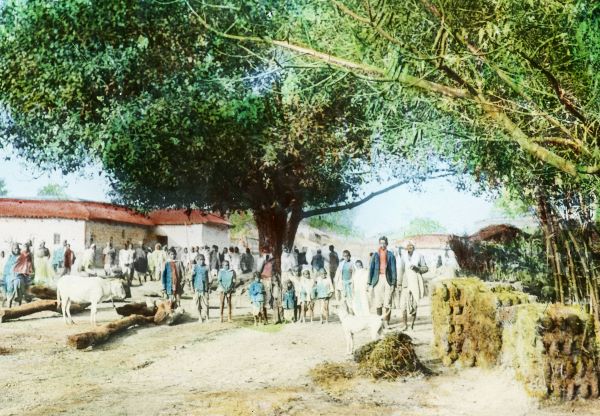
But before that a short story about aol as heard from my father. It was the time of the British raj. An Englishman passing through a village market in now Gopalganj district of Bihar observed that people were buying this root-vegetable from an old woman. There were many buyers for the strange looking tuber. He was curious and asked the old woman whether it was edible; she nodded. So, he bought some home and ate it raw after just washing the tuber. The Englishman must have been hungry and consumed a fair bit before the itching kicked in. He was saved in the nick of time by the villagers, who made him drink liters of buttermilk. The photo below is taken from Wikimedia Commons and is unrelated to the story.
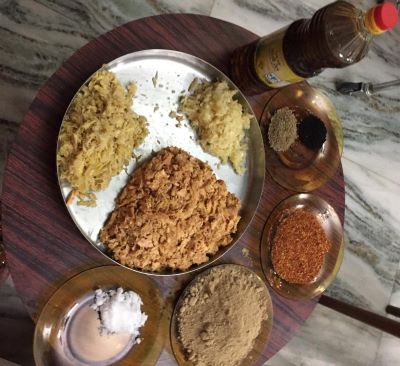
Ingredients for the pickle: 1 kilo of fresh yam/ suran/ ओल crushed; 250 gm ginger/ adrak crushed; 250 gm garlic/ lehsun crushed; 500 gm amchur; 150 gm red chilli powder; 50 gm haldi/ curry powder; 2 table spoon ajawain (carom seeds); 1 table spoon mangrail (black caraway seeds); salt as per taste; mustard oil 250 gm.
The ultra simple process includes: cleaning and crushing the three main ingredients – suran, ginger and garlic – using a mortar and pestle/ sil-batta, then mixing all the ingredients, and finally adding oil and mixing well.
Once done, the mix should be put in a martabaan or glass jar, with a light cotton cloth tied at the top, so that it breathes well. The almost-ready pickle needs to be put out in the sun for two hours each day for two days. Mixing it well after it is brought in after the day’s sunning and retying the cloth. And there it is; simple and delicious – it goes well with rice-and-dal, khichdi as well as with puri/ paratha-subji. The suran’s inherent meatiness matches well with the other flavours that make up the pickle. If refrigerated, the suran pickle will last a year but if not, it would need a little extra oil.
In the northern plains, the best suran ka achchar is made from the October-November crop of suran and adrak. But the best variety of suran is said to come from southern states and is called ‘south-wala suran’, which is also said to be larger in size. Despite its flavour and availability of ingredients, it is, however, a pickle not seen on the shelves of shops.
An aside. There is a fiery version of this pickle too, called barabar ki chutney. Barabar bole toh equal. The only difference is this version has all the main ingredients in equal measure – suran, ginger, garlic and red chillis. one kilo of each.
Will add a couple of more pictures in the coming days. If any of the readers in India wish to taste, please share your address and we will try to courier (no charges) it to you in October/ November :)


Hi,
Would like to taste your great sounding Suran ka achar. Can you please send a sample. My aunt in America wants 2kgs of it.
LikeLike
Sorry Rajeev, it’s a blog for sharing writings, stories and thoughts… there’s no product for sale as such. Also, not sure if one can get it in the market. Thanks for the interest. Regards,
LikeLike