
Sharing my mother (Sheela Tripathi)’s recipe for Amra (Ambda) pickle. This is in continuation of a few such posts earlier. An attempt to preserve her skills that result in home-made natural products to relish and remember.
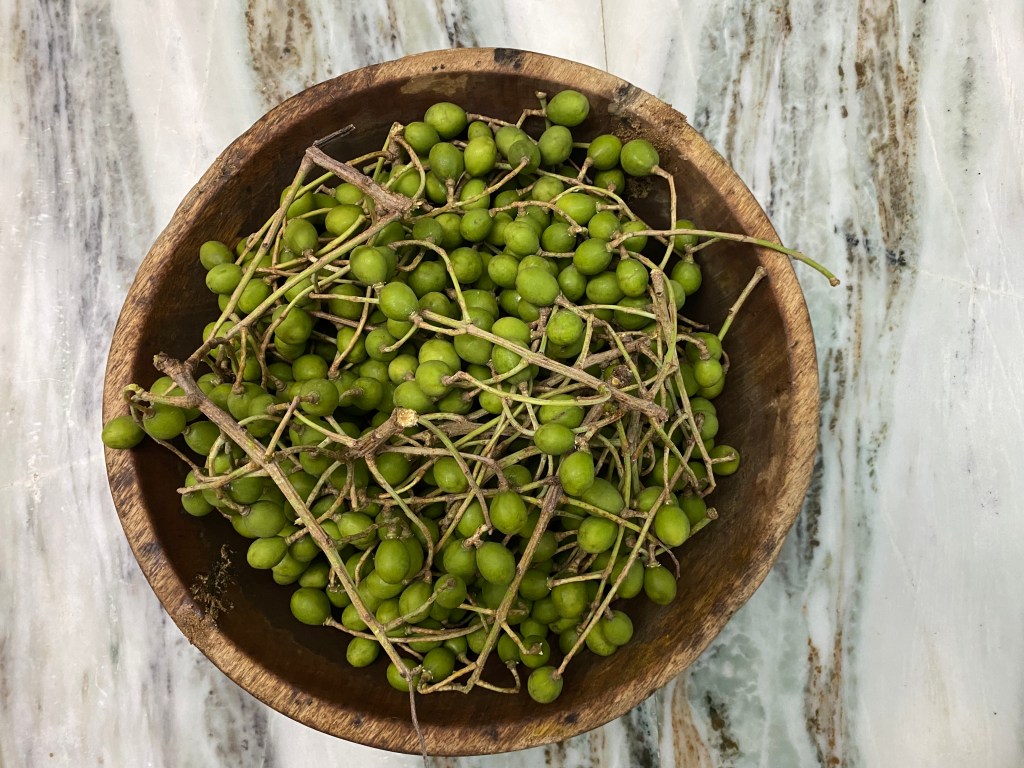
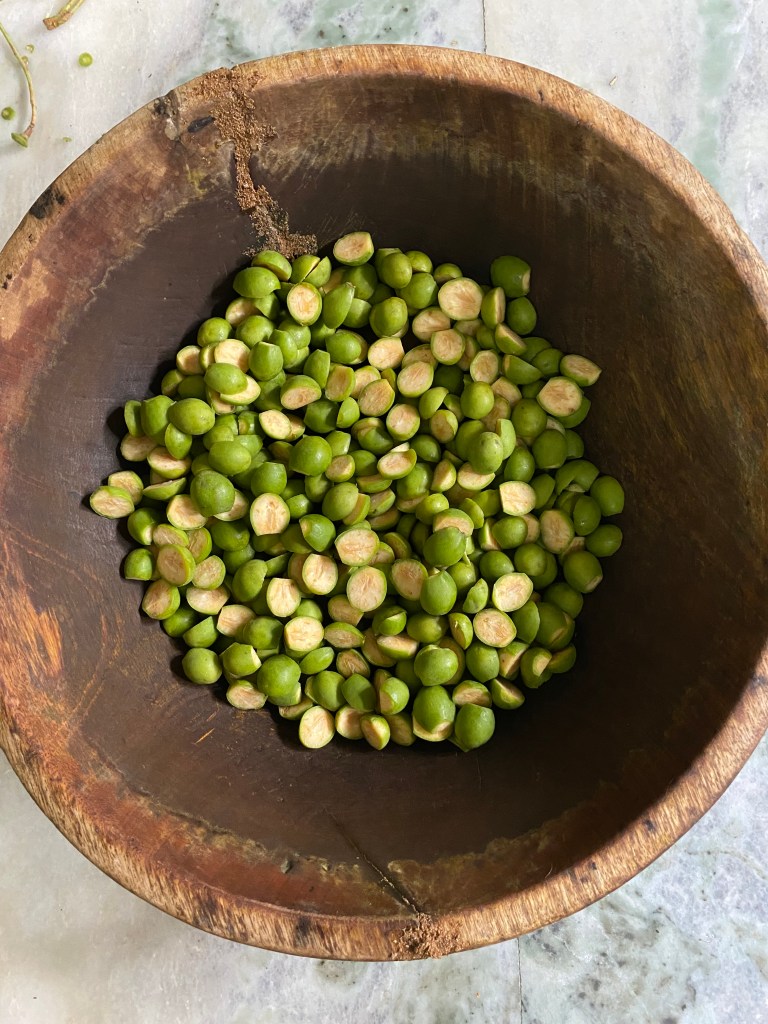


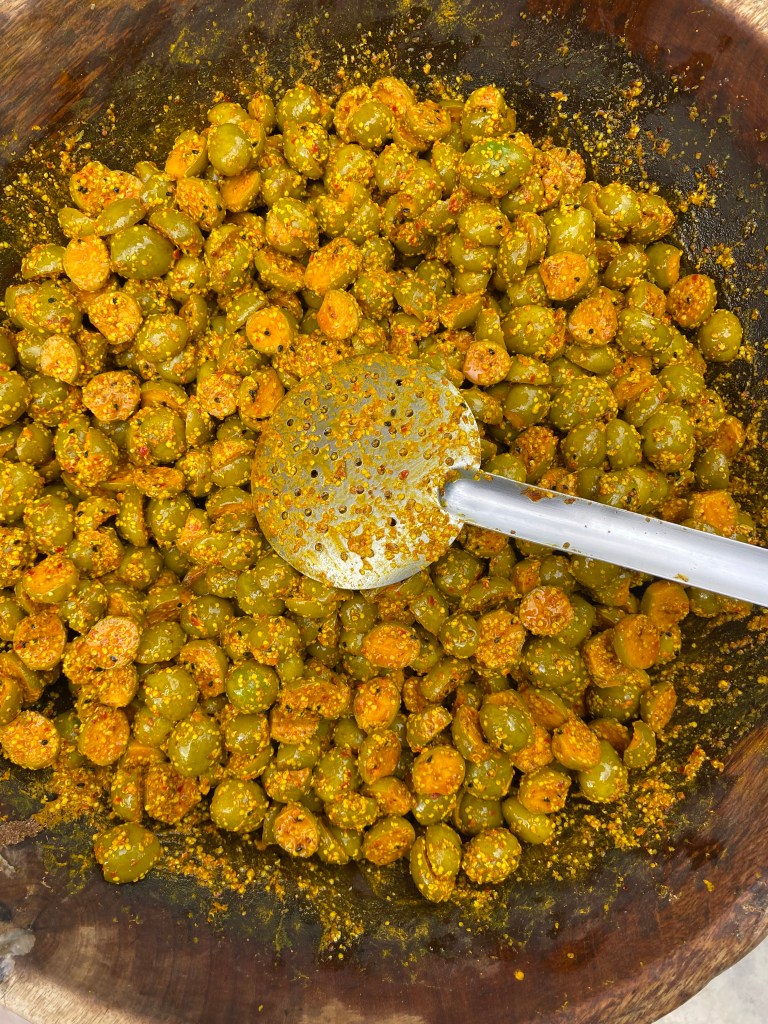
The images above tell the story. Its a two-to-three day affair. This amra could have been picked a little later – a week or ten days, with the seed inside more formed. After picking the fruit, it is important to keep it attached to the stem/twig, to be detached only when the pickle is ready to be made, otherwise, the fruit quickly deteriorates. Ingredients are the same as in Ramkela: adding salt and turmeric powder (image 3) followed by sunning with once in half-an-hour turning so that water from the fruit drains well (the wooden kathauta helps in abosrbing moisture and later excess oil), after the sunning and turning, with the water from the fruit mostly seeping out, ajwain (carom/ caraway seeds) and mangrail/ kalonji (black caraway/ black cumin/ nigella) are added in the evening (image 5) and mixed (image 6). The second day, chilli powder and mustard oil are added and the pickle sunned again. That’s it. By the 2nd day evening, the final product is ready (image 7) to be put in glass jars (martabaan). Good to sun again the third day in a martabaan, if one likes it softer.
The amra (hog plum) tree is found across most parts of India, though it seems to be a less frequent sight now. Its medium sized. Hybrid varieties can be grown in large pots; have seen images in nursery advertisements. The feel of this pickle is unique and cosmopolitan – succulent, surprisingly balanced and refreshing with a not-too-sour taste (as compared to a lemon or raw mango pickle), with a mix of natural tartness and astringency; the sharpness from the mustard; and the pungency from caraway complete it. It could go with different cuisines and drinks.
Will try and add an image of the Amra tree later.

 Pankaj's Blog