
Every day the newspapers report the missing: slyly, hidden among dreary advertisements for an Indian Railways project, or a PWD tender for road repair, a black-and-white photo of a young girl peeps, sometimes of a boy, or a young woman, set in a small box with a cursory, routine description and an appeal by the police. In a pink salwar-kameez and chappals or in a yellow T-shirt and jeans, of slight built or of wheatish or dark complexion they suddenly disappear from our streets without a trace. Today it is: Jyoti, Poonam, Shabnam and Sujata Devi; tomorrow: Sita, Golu, Kamala, Lakshmi … Some to emerge decades later from the dark shadows, many more to disappear forever into a searing oblivion.
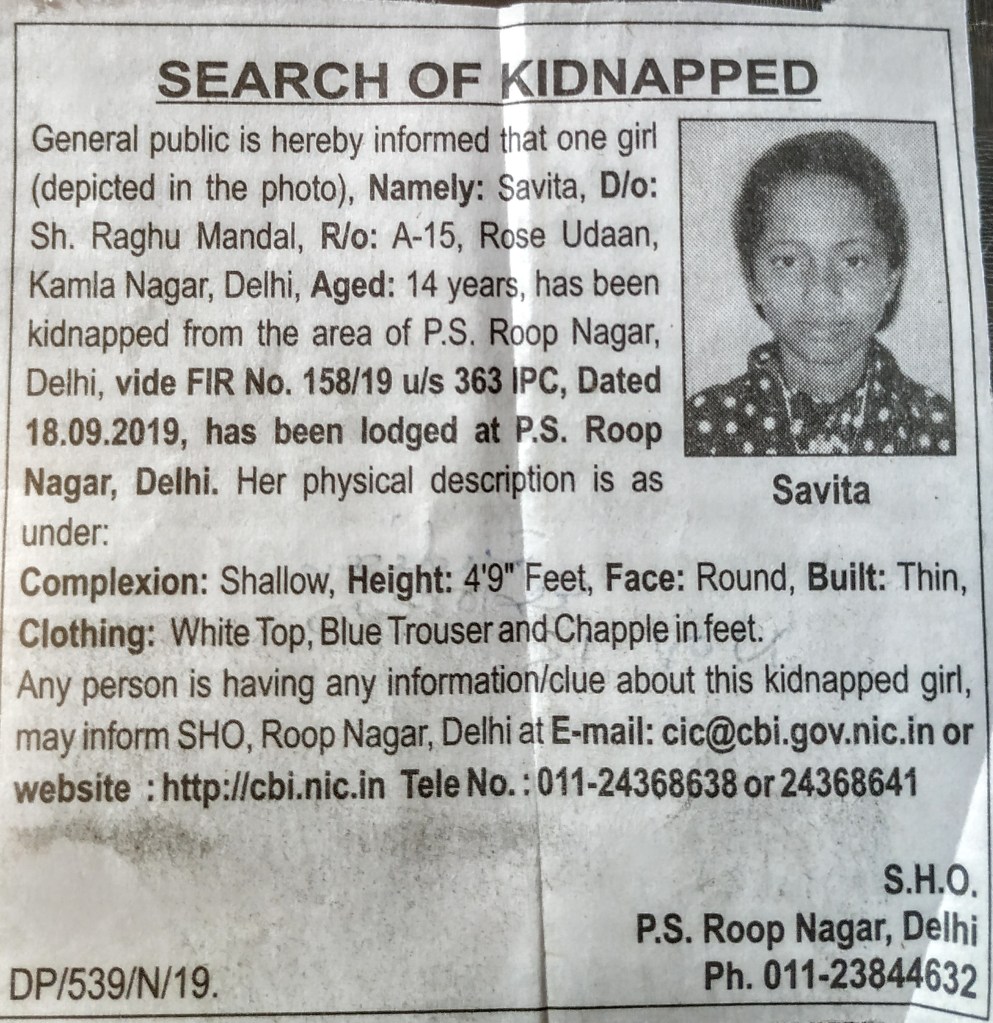
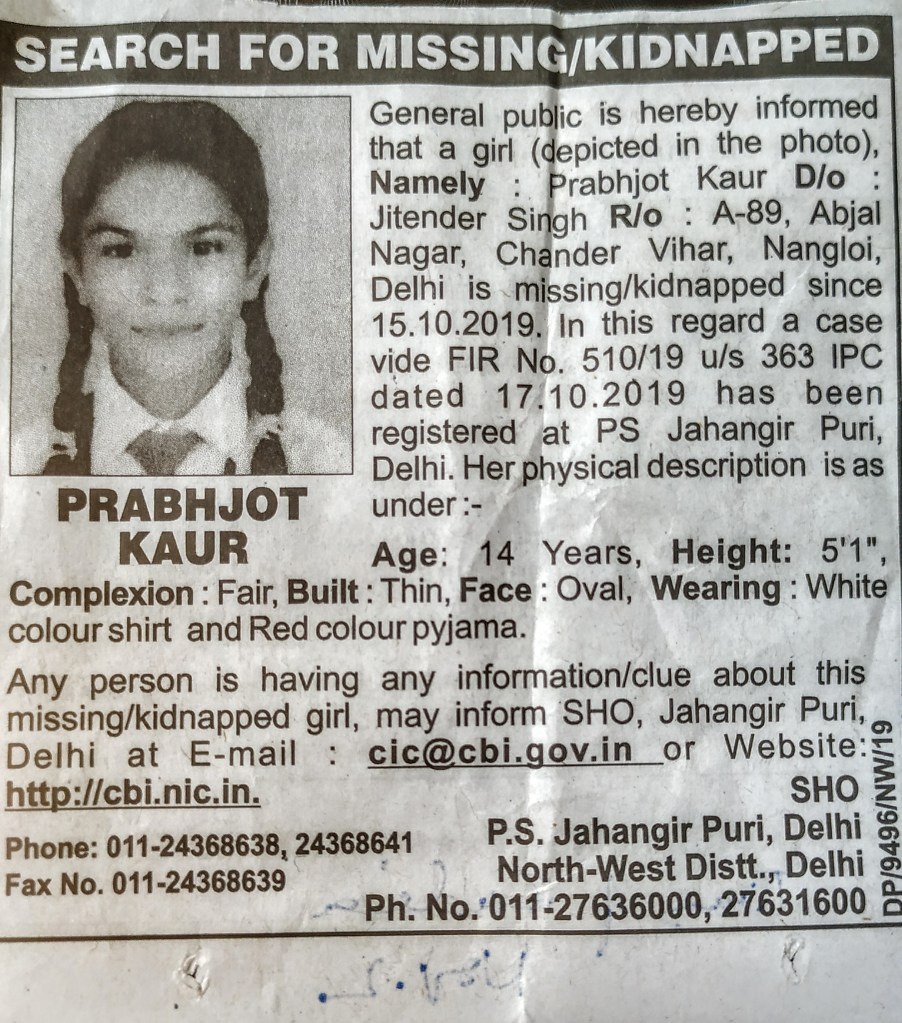
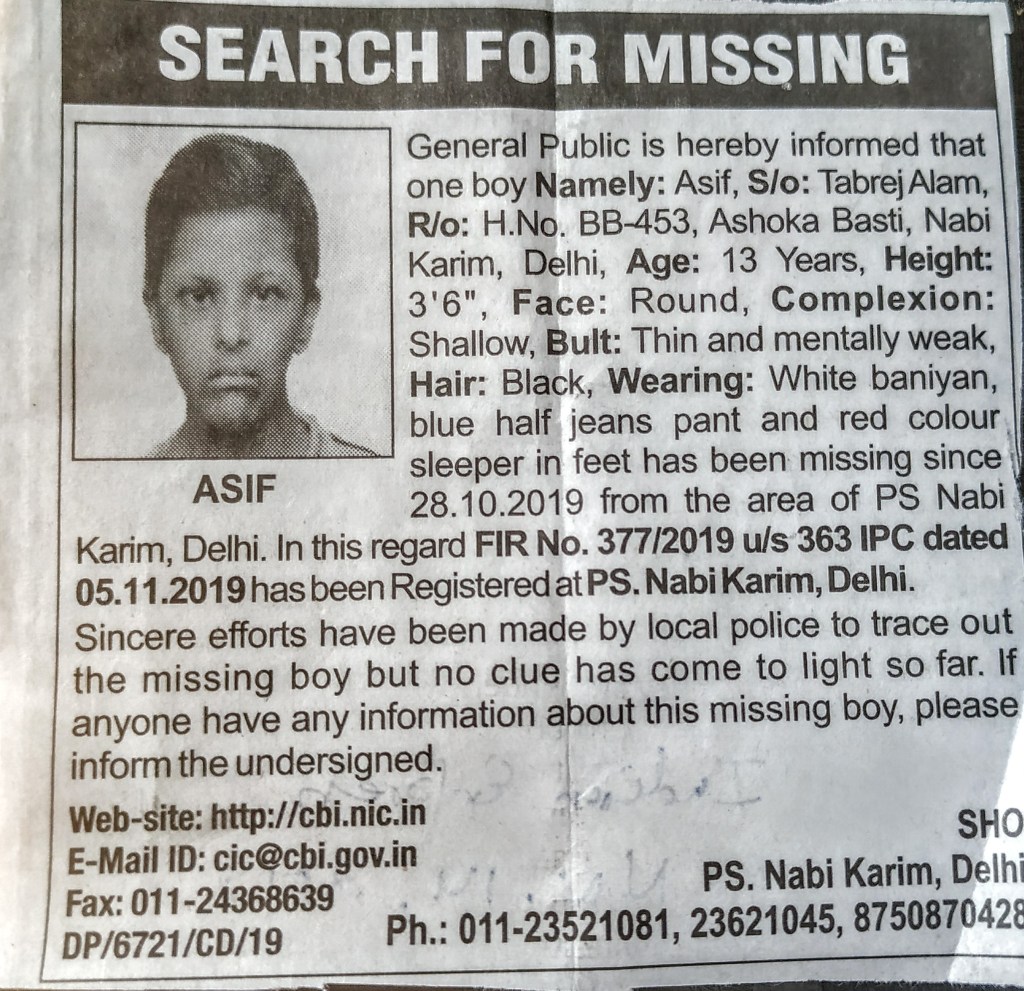

We barely even glance at these dark windows that open into other, nether worlds… no, the same world showing its ugly, malevolent underbelly, and, brood over their wretched fate. The agony their bodies and minds trembling with fear must be bearing is way beyond our privileged imagination. Captive, surrounded by people who prey on them day-after-day for money and lust, while protecting and caring for their own children at home.
At times running away from abuse in their own families, every day they vanish from our sprawling cities and small towns and villages and hamlets, children of a proud nation to silently suffer hidden lives of brutality and degradation – traded, drugged, raped and tossed like lifeless baggage between traffickers and their clients, in a ruthless, subterranean world. The powerful government seemingly rendered helpless, unable to check the flourishing trade. The enormity and utter shamelessness of it all – of us as citizens, adults and parents, how it doesn’t rob us of our laughter and suck all joy is something to cringe about.
A few organizations and activists work for these children, but the odds heavily favour the body snatchers. The figures are numbing: one child disappears every eight minutes (comes to more than a thousand every day) according to the National Crime Records Bureau (NCRB). Mostly from poor, marginalized, vulnerable families. And the scourge only grows; the trafficking in young girls has grown multiple times in the past decade in a nation whose Bapu‘s favourite song was, “Vaishnava jana to tene kahiye je, peer paraee jane re …”. We not only trade in our children but of our neighbours too building million-dollar syndicates in our megalopolises. India is also a major transit country for girls and women from Nepal trafficked to the Gulf nations.
Nothing can be more urgent than to pay heed to the suffering of these forgotten children. It’s time to fight this degrading menace as one. The Trafficking of Persons (Prevention, Protection and Rehabilitation) Bill, 2018 provides the necessary policy framework to act against it with strength. The pendency of cases (around 1.5 lakh in 2019) under the Protection of Children from Sexual Offences (POCSO) Act and in other cases related to human trafficking is alarming. It emboldens the offenders and the well-oiled trafficking mafia by resulting in significantly lower rates of conviction. Special courts to deal with these cases in a strict time-bound manner would have a major impact as would strengthening of the intelligence network against the traffickers by improving coordination between the local police and grass-root level organizations. Most importantly, the country’s leadership needs to emphatically express its political resolve to tackle this problem. Otherwise, this beast will keep growing.
Surveys have put India as one of the countries with the worst record of crimes against women. Besides acts of violence/extreme violence against women and children that are reported regularly in the newspapers, the crime of human trafficking looms large in the shadows and has been one of the major factors increasing the vulnerability of women and children.
One day in a year, shouldn’t the newspapers just carry images of the missing children of India on the front and back pages. Just one day, when the boxes emerge from amongst the advertisements for tenders to shake our numbed/weakened conscience and force the people and authorities to action.

 Pankaj's Blog